Thursday, November 6, 2008

Halloween rivals all other weeks for top billing on citations given

Photobucket

The inevitable party week of Halloween proved to be quite a problem for police officials this year when seven counts of public intoxication were reported.

It seems that this year, most everyone was forgoing trick-or-treating in favor of other activities. On all-hallows eve, many students were cited for illegal acts throughout the week. As is usually the case, with the pumpkins and celebrations come and equal degree of foolish activity.

“I’m sure it was a busy night,” said Detective Chris Schivley. “Thankfully I got to go home early so I didn’t have to deal with all that Halloween business.”

Starting on Oct. 25, parties around campus were in full swing, many of them taking place in the dormitories. While there were seven counts of public intoxication, several other rule-breakers weren’t caught in the act, as the group had dispersed before officials could get to the scene and issue citations.

One would think that with the amount of citations issued, there would have been more noise disturbances as well during the week, not so. Officials say there were no counts of “quiet-hour” commotion that were reported.

“It was really quiet inside the dorms, maybe because everybody went off campus to party,” said marine biology major Brittney Seeley.
Among those that did stay on campus to celebrate the holiday, two were arrested for their disorderly conduct. Field interrogation cards were also filled out, letting the police record show who was involved and at what time, just in case they were snagged by police again later in the night.

“I heard a lot of people got busted for alcohol, and I believe it,” said senior Pat Beck. “There was a lot of bottles lying around the next morning.”

Photobucket

It may have the been the alcohol that contributed to the 11 counts of illegal parking. Not only were students having trouble finding the correct way to park a vehicle, they were in need of finding their vehicles as well. Reports show that three students needed assistance in finding their vehicles during the week.

A final count of indecent exposure rounded out the incidents for Halloween’s party week. Faculty, staff and students can only hope that next year does not bring with it an escalation of illegal acts on or off campus.

Paranormal events have students fearing for security

Missing toothbrushes, doors left ajar, disturbing noises in the night. No, it’s not a crazed sociopath some California State University, Long Beach students are fearing, it’s the supernatural.

Many dorm residents have reported eerie happenings inside their rooms and hallways on campus. Most cite the Indian burial grounds as their main reason for worry. Those closest to the grounds, mainly parkside building G, are fully aware of the sacred grounds and what they mean.

The 22-acre chunk of land that has been left untouched by school officials for decades is actually known as Puvunga, the ancient burial land for a Gabrielino tribe. Since the appointment of President F. King Alexander at the college, disputes over the land have been more frequent. Some students are under the impression that the spats over the land is causing the paranormal events to occur more often.

Photobucket

“Lots of stuff in my room would move spontaneously, and I’m not talking about little stuff either,” said pre-nursing major Christine Camarda. “Huge bottles of shampoo flung themselves off the top shelves of our wall more than once.”

Camarda’s suitemate also had odd things occur inside her dorm as well. Brianne Rokey said she came in to her room with a basket of laundry, dumped it all onto her bed and left it there before going out for a few hours. “When I came back, things were all folded. I know I didn’t fold them, and my roommate hadn’t been back yet, for a while I thought it was a joke,” she said.

These occurrences do not stop at mere cases of objects being misplaced, they escalate to full-on visions of people. On student claims she saw an unknown man exit her room as she woke in the early morning hours.


Photobucket

“I had to get up for skating and leave at four in the morning everyday, and one time I glanced up toward my window as I got in the car,” said psychology student Brittany Cisneros. “When I looked I saw a man at my door, it scared me so bad that I looked away.” Cisneros said that when she looked back for the figure a split-second later, there was nothing there.

These incidents may end up lending themselves to crime in the dorm buildings closest to the grounds. Several students were locked out of their rooms or had their doors spontaneously open, though they were locked.

“I was walking in the hallway toward my room one time and the double doors near the common room just slammed shut,” said freshman Andrea Capili. “Both of them just closed right in front of me, and there was no one there.”

Cisneros not only was fearful of the man that she thought was inside her dorm, but also that someone could easily get into her room after some of the events happened. At one point, her door opened completely on its own.

“I was sitting on my bed, and my door was closed and locked when I heard the keycard slide,” said Cisneros. “When it slowly opened I leaned my head out to see if it was my roommate, but nobody was there. Not in the hallway, not the bathroom, nothing.” After that day, she said she was scared that whatever being was opening her door would leave it open and someone would come in and steal from her.

Whatever these events may be, paranormal or coincidence, they are not helping the accessibility for criminal activity at the dorms here on campus.

Election night proves to be trouble for law enforcement

As the presidential election winds down to it’s final moments, silence is shared across Long Beach’s campus. Presidential nominee Barak Obama is finally announced as the winner and screams of both joy and anger are heard.

No one could have predicted the outbursts that were heard from several large groups of students supporting opposing sides of the election. Screeches of a group of students from outside H building of the dormitories resulted in a noise disturbance dispatch.

“F*** Obama,” is shouted from the second story of one building in parkside commons just after the announcement. This comment catapulted what could be seen as a small scale riot outside the young man’s window. The uproar lasted 15 minutes before both parties agreed to disagree.

Disruptions like these continued throughout the night, paving the way for many calls about quiet hours to the police dispatcher. Not every call resulted in a citation or warning however, many of the students had dispersed by the time officers responded to the scene.

“We had more commotion that night than we did on Halloween,” said the dispatcher.
Eventually, three police cruisers sat outside parkside commons in order to respond to the site immediately if there were need for their assistance.

Standing outside in parking lot 14 D one student could be heard commenting on the ruckus, “this is outrageous, what’s with all the yelling?” she said.

In the morning, broken bottles of liquor were found riddling the streets and parking lots of the school. It seems as if the campaign lended itself to outright chaos for many groups of students that were still on the premises during the announcement.

The Nugget Pub & Grill was a hotspot Tuesday night during the finale of the election. National news syndicate NBC even made a point of appearing for two hours during the pre-party.


While the scene inside the Nugget was on the milder side, officials were prepared for any type of riot that may have occurred. A police cruiser was parked outside the pub through part of the viewing, as were several officers to make sure there was no disturbance of peace.

Despite the overall hostile environment on campus, no arrests were made that night. For maintenance crews, it was just another day at work as they cleaned up beer cans and broken glass from the commotion that occurred the night before.

Building marshal coordinator proclaimed a hero

Scott Brown, 45, sits idly behind his desk at California State University, Long Beach, shuffling papers and answering phone calls. A boring day, except when this real-life Superman ditches his Clark Kent identity the moment a life is in danger.

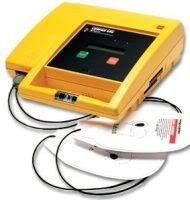
It is Dec. 2 when Brown gets a call at his office, telling him there is trouble. He reacts quickly, snapping into action and running to the scene. Christina Ruiz, a kinesiology major, has collapsed on the field after a routine run. She is devoid of all vital signs. His training kicks in and he implements AED technology, a machine that records heart irregularities and shocks the victim if necessary. Ruiz’s heart stops two more times on the way to the hospital, but thanks to the quick decisions by Brown, she makes a full recovery.

Photobucket

“Had it not been for the outstanding contributions of Sergeant Brown, Corporal Tith, and Officer Schivley, Christina Ruiz would not have survived,” said Ruiz’s cardiologists.

This true-to-life action figure happens to be the on duty emergency preparedness coordinator for California State University, Long Beach. While maintaining that position, he is also a lieutenant at the campus police department. It is Brown’s responsibility to activate the emergency operations center if ever a threat should arise. This responsibility works with the his other job as head of the building marshal program. The program trains faculty members to quickly and efficiently evacuate school buildings in a time of crisis. Essentially, it is Brown who keeps the campus from chaos.

His job and those of his colleagues have saved countless lives on campus, but don’t get him wrong, he’s just an ordinary guy.

“Oh man, once I’m retired and everything, I’d totally want to just pack my family’s things and go rving across the states,” said Brown. He says before he became a police officer, it was his goal in life to become a fish and game warden in Alaska. While researching the position, he learned he had to have two years of experience in law enforcement before applying for the warden position.

“I started working as an officer and I thought, wow, I like this,” said Brown. Instead of continuing toward his goal as warden, he stayed where he was at the police department, steady in his vigil against evil-doers.

Where does Brown get his superpower law enforcement skills? CSULB, of course. Lt. Brown started his college career at the very same school he now serves to protect. Growing up in Long Beach his whole life, it was only natural for him to continue his academic career at CSULB, where he started classes in the 1980s.

“I met my wife at Long Beach, started my police duty there and then I thought, why leave?” he said. The ongoing student says he took the “lifetime approach” to learning, spreading his courses across several decades. Brown received his bachelor’s degree last year and hopes to continue his studies, enrolling in the master’s program for emergency services.

When this Long Beach resident isn’t juggling duties as student, lieutenant and director of several programs, he’s often found teasing colleagues around the office.

Maryann Rozanski, director of safety and risk management on campus and a long-time friend, said she had a hard time training Brown in one of their courses. Everyone in the law enforcement field must be trained in several courses, Rozanski happened to teach a class about how to repel out a second story window.

“I remember telling him you had to tie a knot with one hand while you repelled and he was giving me such a hard time about it,” she said. “I finally told him to be quiet and just learn how to tie the knot before I told everyone at the department I’d known him since he was 12-years old.” She said he just stared at her open-mouthed before he quiet down and learned how to tie the knot as fast as he could.

“It was really interesting and rewarding for me to see him grow into the professional young man he has become,” Rozanski said. “He’s an appropriate combination of focused, serious and good-humored. It’s perfect for what he does.”

Other colleagues say the same of Brown’s demeanor. When there’s nothing else to do, the down-to-earth lieutenant makes jokes and talks with the other members of the department. It’s like a switch is flipped when it comes to a serious time though.

“When we all responded to the scene on Dec. 2, he did what needed to be done,” said Detective Chris Schivley, who also responded to the Ruiz incident. “There’s nothing that’s routine about that, but we’re all trained in that type of situation. We just do it.”
Since Brown started the AED technology on campus, it has been used six times. Every life, aside from one, was saved using the technology.
Photobucket

“Brown was the one that got our department the AED technology,” continued Schivley. “Without him, we wouldn’t have it. He’s a great leader.”

While Lt. Brown is proud of all he’s accomplished, the figurative un-caped crusader would blush at all the compliments, showing he’s more than just a hero. He’s an ordinary person

Wednesday, November 5, 2008

Campus reveals plan to extinguish doubt

What do a hardhat, gloves, a flashlight, goggles, a safety vest, safety tape and a little training all have to do with keeping California State University, Long Beach’s campus safe? Everything.

Each of these items must be within close reach in case of an emergency to all of the marshals trained by the school in evacuation. The Building Marshal Program is a training plan that quickly and efficiently readies marshals for systematic clearing of every building on campus. This program is essential in making the campus ready for any threat against it.

CSULB shields itself from the potential for any harm against its students or faculty as the seventh-year anniversary of September 11th passes, by training as many marshals in the Building Marshal Program as possible.

“We’re preparing them for the real thing,” said Sgt. Scott Brown of the CSULB Police Department.


Photobucket

CSULB’s little-known emergency plan has been successfully staying under the radar for the past several years. The program is actually a highly specific evacuation plan drawn up by specialists in risk prevention.

Each building on the campus is staffed with two marshals trained to handle anything from hurricanes to terrorist threats. In the event of a real threat, these marshals put their life in danger to protect the campus for the benefit of the masses. The marshals not only evacuate the buildings, but also, secure entryways, direct foot-traffic away from danger and deny anyone re-entry into the building before given official authority to do so.

Who are these brave men and women?

Every one of the marshals is a volunteer member of the faculty or staff. These individuals contact the emergency coordinator in order to be trained for three arduous hours to maintain campus safety. Basically, these people are not being paid a cent for their troubles. The marshals do their duty out of their want for safety maintenance throughout the campus.

“Are students allowed to volunteer with the marshals to have this title also?” asked student Chris Smith.

Unfortunately, because of the nature of the setting, the plan denies students access to the program.

“We greatly appreciate everyone’s cooperation with the drills,” said Sgt. Scott Brown who heads the Building Marshall Program. “They are an important part of making this campus safer.”

Sgt. Brown hands over his position to Sgt. Rick Goodwin at the end of this year after five years of service.

Thursday, September 18, 2008

Harassment continues despite student services provided

Regardless of Cal State Long Beach’s attempts to defeat violence and harassment on campus, the acts continue this semester.

Wednesday night around 10 p.m. a female student was seen walking back to the residence halls when two young men began harassing her.

“I was going to use an officer escort back to my room, but they were taking two other girls to the parking lot so I walked back myself,” said the female student who preferred to remain anonymous. “I walked past the guys and I could hear them say inappropriate comments, but I brushed it off until they started to follow me and shout at me to slow down so they could talk to me,” she continued.

At that point, the student says she dialed her friend on her cell phone to have someone to talk to as she walked as quickly as possible to get back to the dorms before the two men caught up.

“Thankfully I reached my roommate before the two guys got in their car and sped off, yelling out the window as they left,” she said. “I should have called for a police escort.”

Photobucket

CSULB’s campus offers numerous services to students, faculty, and staff to reduce the amount of negative incidents on campus including police escorts available late into the night.

The night escort service, also known as the Community Service Officer Program, provides safe transportation for anyone on campus in need of extra security.

Photobucket

“I use the campus police escorts once a week,” said student Brittney Seeley, 20. “I don’t know if it prevents incidents, but I think it makes people feel more secure.”

While these services are provided, at times they are not as practical as they seem.

“I’ve sat there for 20 to 25 minutes waiting for an officer before and I think in that time something can happen,” said Seeley.

In September alone there are 23 reports of suspicious vehicles, one report of stalking and one report of assault and battery so far. The services provided by campus police may help hinder many harmful situations, but they do not prevent them. Safety on campus, especially at night, is stressed.

You may request an escort Sunday through Thursday from 6 p.m. to 11 p.m. by using a public pay phone's University Police button or by dialing (562) 985-4101 from a pay phone or cell phone (5-4101 from on-campus phones). Campus Police can be reached after hours to provide the same services to individuals in need of them.